What Happens To Your Body When Recovery Breaks Down?
Alcohol, drugs, poor sleep and chronic stress can affect the brain, heart, hormones, digestion, mood, energy and recovery. See what happens — and what helps the body recover.
Educational only — not a diagnosis. Not judgement. If you may be in danger, contact emergency services.
Tap A Body Area To See The Effects
Turn stressors on to watch the body light up. Press “Show Recovery” to see what helps.
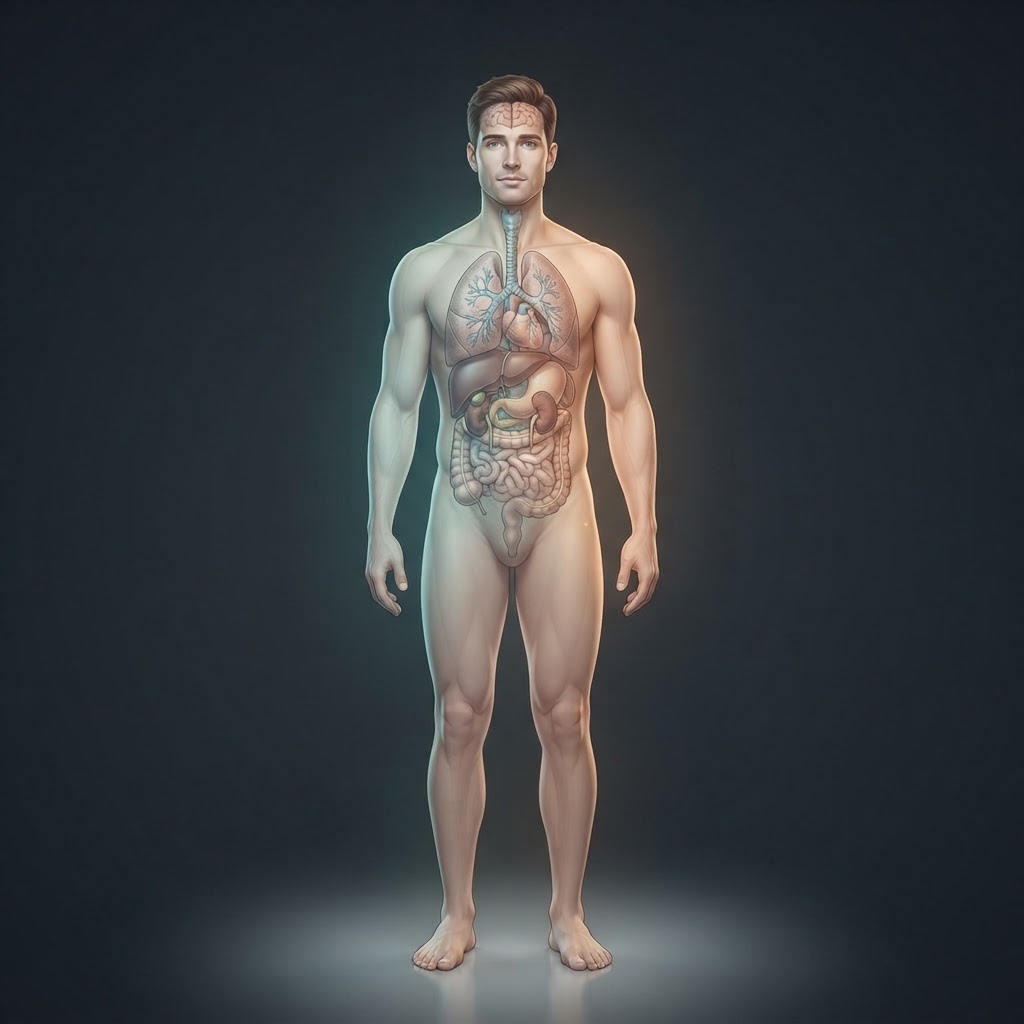
Brain
How selected factors may affect this area.
- Slower reaction time
- Poorer judgement
- Impaired coordination
- Reduced sleep quality
- Mood changes
- Poorer concentration
- Weaker memory
- Lower impulse control
- Slower reaction time
What Repeated Or Heavy Alcohol Use Can Do
- Slower reaction time
- Poorer judgement
- Impaired coordination
- Reduced sleep quality
- Mood changes
- Increased heart rate
- Blood pressure changes
- Longer-term cardiovascular strain with heavy use
- Liver fat accumulation
- Inflammation
- Reduced ability to process toxins
- Stomach irritation
- Reflux
- Dehydration
- Disrupted digestion
Alcohol may make someone feel sleepy initially, but it can reduce sleep quality and fragment sleep later in the night.
- Slurred speech
- Reduced coordination
- Lowered inhibitions
- Dehydration
- Disturbed sleep
If you may be dependent on alcohol, do not stop suddenly without medical advice — withdrawal can be dangerous.
Effects Differ By Substance, Amount & Person
This page is educational. It never provides instructions on how to misuse drugs or increase their effects.
Stimulants
- Increased heart rate
- Increased blood pressure
- Agitation
- Reduced appetite
- Difficulty sleeping
- Anxiety
Effects depend on the substance, amount and person.
Depressants / Sedatives
- Slowed reactions
- Drowsiness
- Impaired judgement
- Slowed breathing with some substances
Some depressants can slow breathing dangerously, especially mixed with alcohol.
Opioids
- Drowsiness
- Constipation
- Impaired judgement
- Dangerous slowing of breathing in overdose
Opioid overdose is a medical emergency — contact emergency services immediately.
Cannabis
- Altered perception
- Slowed reaction time
- Anxiety/paranoia in some people
- Impaired short-term memory
Effects vary widely between people and situations.
Prescription Medication Misuse
Taking medication differently from how it was prescribed — more, less, mixed with other substances, or from someone else — can cause serious harm. This page never provides instructions on how to misuse drugs or increase their effects.
- Always follow the prescriber's instructions
- Tell your doctor about all substances you use
- Never combine sedatives with alcohol
- Ask about safe stopping — some medications must be reduced gradually
What Happens When You Don't Sleep Enough?
- Concentration
- Memory
- Judgement
- Reaction time
- Emotional control
- Irritability
- Low mood
- Increased stress sensitivity
- Poorer physical recovery
- Reduced training performance
- Increased fatigue
- Appetite changes
- Cravings
- Disrupted normal hormone rhythms
Persistent poor sleep can affect immune function.
Tiredness, lower focus, irritability, reduced performance — usually recovers with good sleep.
Building fatigue, mood changes, cravings, poorer recovery and concentration.
Persistent low mood, reduced immunity, strained heart and metabolism, higher stress sensitivity.
What Chronic Stress Does To The Body
The stress response is the body's way of preparing for a challenge — raised heart rate, alertness and energy. Short-term stress can be useful. Persistent stress can become exhausting for the body and mind.
What Anxiety Can Feel Like In The Body
Chest pain, breathing difficulty or fainting can have serious causes. If you may be in danger, contact emergency services.
How Problems Can Compound
Problems rarely happen alone. One feeds the next — and the loop can repeat.
One small change anywhere in the loop can start to reverse it. Sleep tonight. Water now. One walk. One breath.
A Difficult Day vs A Recovery Day
Stressing The Body vs Supporting Recovery
- Poor sleep
- Heavy alcohol use
- Substance misuse
- Dehydration
- Poor nutrition
- Chronic stress
- Inactivity
- Sleep
- Hydration
- Nutritious food
- Gentle movement
- Daylight
- Breathing
- Social connection
- Professional help when needed
A Safe Way To Support Your Body
You don't need special drinks, supplements or extreme fasting to 'detox'. The liver and kidneys already perform the body's main detoxification functions.
A Gentle Optional Plan
Water, steady sipping, gentle rest, daylight.
Consistent bedtime, wind-down, reduce screens.
Protein, fruit, veg, whole foods, regular meals.
Easy outdoor walk, morning light.
Slow breathing, meditation, grounding.
Talk to someone, community walk or meet-up.
Reflect, plan, keep what helps.
This is a gentle optional wellbeing plan — not treatment for addiction or withdrawal.
When Your Body Needs More Than A Recovery Routine
When your body needs more than a recovery routine, appropriate professional help matters.
Alcohol and some drug withdrawal can be medically dangerous. People who may be dependent should not suddenly stop without appropriate medical advice.
If someone may be in immediate danger, contact your local emergency services straight away.
What Is Affecting Your Recovery?
Select all that apply — we'll suggest Forged Hub wellbeing tools and encourage professional help where needed.
Select something above to see suggested tools.
Before you begin
These recordings are provided for relaxation, meditation and general wellbeing. Claims that particular sound frequencies diagnose, prevent, treat or cure medical or mental-health conditions are not supported by reliable scientific evidence. This content is not medical treatment and must not replace professional advice, medication or healthcare. Listen at a safe and comfortable volume.
You can review this notice again from the info icon beside any track.